The tingling on your skin, the hair on your arms and legs standing straight up, the confusing rush of emotion, these aren’t all coincidental reactions; they are all responses your brain generates. Welcome to the intersection of music and the psyche.

Why Do We Yawn—And Why Is It Contagious?
Yawning. The messenger of sleep deprivation. You can’t run from it. Yawning is something we’ve all done, whether it’s mid-conversation, in class, or even after seeing your friend do it; it’s a natural phenomenon. Yawning is such a tiny, instinctive act that we all do every day, but it rarely prompts anyone to pause and question it. Why in the world do we yawn? Is it our body telling us that it’s tired? Is it just a silly way our brain mimics others’ yawning? Why do we yawn automatically when seeing somebody else yawn?

Why Do We Treat People Unfairly: Exploring Human Nature and Injustice
Why Do We Treat People Unfairly: Exploring Human Nature and Injustice
Our world lies in the hands of discrimination, injustice, inequality, and disparities. These have been everyday struggles across the globe and for generations. Bryan Stevenson and many others have struggled to realize where the conception of unfairness derives from. The true essence of the question: Why do we treat others so poorly? The answer lies within understanding human nature, the various characteristics all humans almost inherit, and how the media distorts our reality. It’s a very likely assumption that human behavior and such can be altered, but old habits that have been embedded so deeply in our subconscious can die hard. The question of injustice stems from a many reasons, each highlighting and encompassing a plethora of aspects of day-to-day life.

Possessions and Their Value
Possessions and Their Value
In the United States of America, a country that thrives on materialism, consumerism, and capitalism, everything is a race. Whether it’s who has the trendiest makeup, popular video games, and up-to-date fashion. People earn what they put in because money is of utmost value here. Without it, everything in our country would crumble.
Bigfoot, Culture, and the Fear of the Unknown.
Bigfoot, Culture, and the Fear of the Unknown.
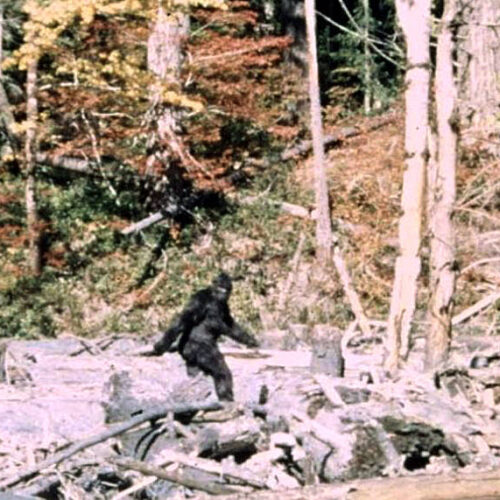
Humans have all heard of Bigfoot—the man, the myth, the legend. Many believe it represents humanity’s fear of the unknown. Despite years of speculation, Bigfoot remains a mystery and is deeply embedded in our perception of nature. It has persisted across various cultures. For some background, Bigfoot is an urban legend about a large, ape-like creature said to roam remote forests. Cultures worldwide have their versions of this creature: Russia has the Yeti, Canada the Sasquatch, China the Yeren, Japan the Hibagon, India the Mande Barung, Pakistan and Afghanistan share the Baramanou, Australia has the Yowie, Malaysia the Minyak, and South America has the Mapinguari (Radford).